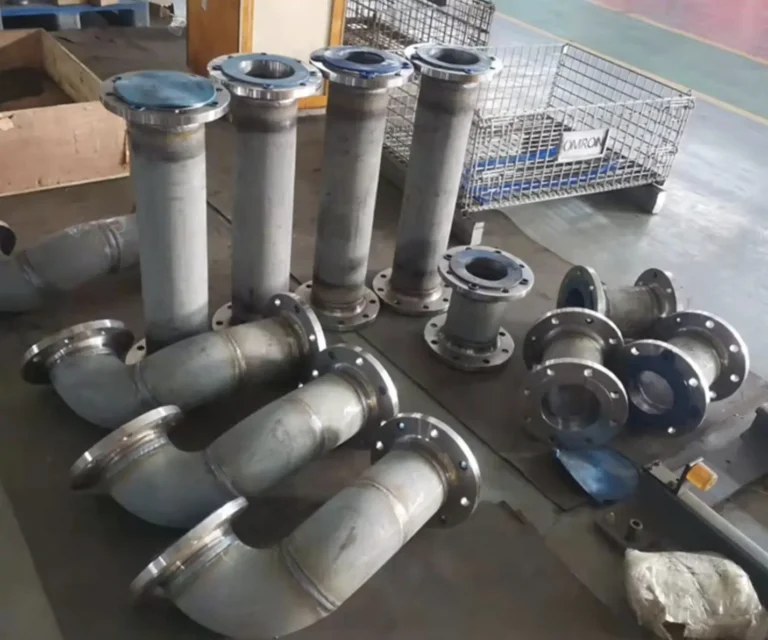
What is a Blind Flange? Definition, Types, Applications & Standards
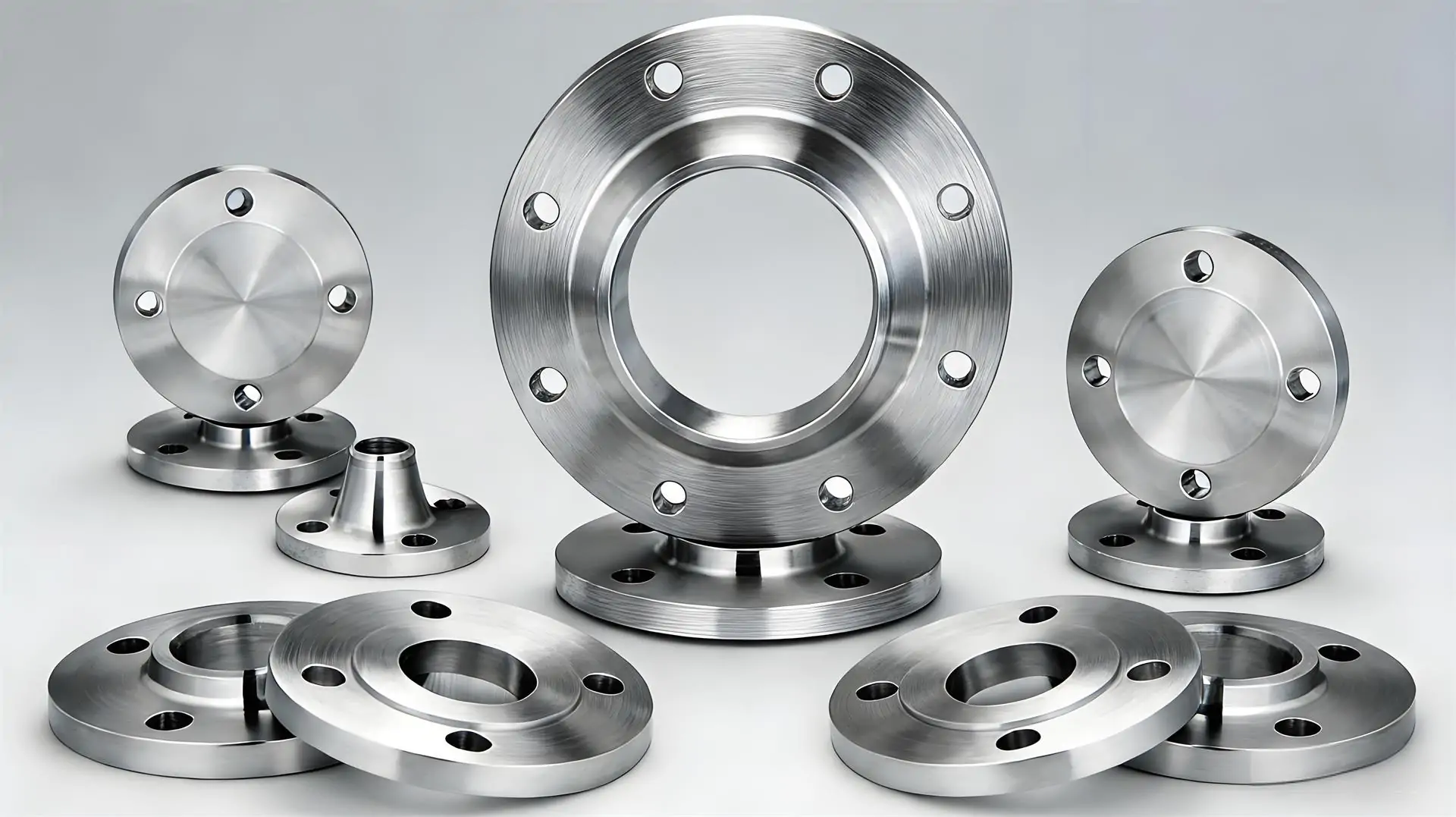
A blind flange, also known as a flange cover or blank flange, is a solid disk-shaped component used to seal the end of a pipe, valve, or pressure vessel opening. Unlike welded caps or permanent closures, blind flanges provide a removable, bolted seal that allows for future access, inspection, or system modifications. This makes them essential in industries requiring routine maintenance, system testing, or the ability to isolate sections of piping networks without permanent alterations.
Blind flanges serve the same fundamental sealing purpose as welded end caps but offer critical advantages in flexibility and maintainability. While end caps are permanently welded and intended for long-term or permanent closures, such as the sealed ends of industrial boilers, blind flanges can be easily removed and reinstalled, making them ideal for temporary sealing, testing phases, or applications requiring periodic access.
How Blind Flanges Work?
Blind flanges are designed to completely seal and isolate sections of piping systems or pressure vessels. Their primary function is to prevent the flow of process media (liquids, gases, or slurries) through a pipeline or equipment opening, ensuring complete system isolation. This is critical in situations where shut-off valves alone cannot guarantee 100% leak-tight sealing, valve seat leakage or incomplete closure can lead to production hazards, environmental incidents, or catastrophic accidents. By installing a blind flange downstream of isolation valves, operators achieve positive isolation that meets safety regulations and operational requirements.
Applications and Use Cases
Pipeline End Closure and Testing
During construction or commissioning phases, blind flanges are used to temporarily seal sections of pipe, allowing completed sections to remain pressurized or undergo testing while construction continues on other sections. After hydrostatic testing or leak detection, the flanges can be removed to connect other pipe sections.
Equipment Maintenance and Inspection
When equipment such as heat exchangers, pumps, or vessels require internal inspection or cleaning, blind flanges can isolate the equipment from the operating process system. This prevents accidental fluid flow or pressure buildup during maintenance, ensuring worker safety.
System Reconfiguration and Multi-Branch Networks
In complex piping networks with multiple branches, blind flanges can be used to direct fluid flow by sealing off unused outlets. This is common in utility systems (nitrogen, compressed air, steam) where distribution headers connect to multiple connection points, but these points may not be used simultaneously.
Pressure Testing and Commissioning
Temporary blind flanges allow for independent pressure testing of individual system sections before full integration. This phased approach allows for early detection of leaks or weak points, reducing overall commissioning time and costs.
Long-Term Isolation Requirements
For decommissioned equipment or mothballed production lines, blind flanges provide safe and reliable isolation that can be easily reversed if the equipment needs to be reactivated later, unlike cutting and capping pipes, which is permanent.
Types of Blind Flanges
Standard Blind Flange (Plate Type)
The most common design, featuring a solid circular disk with bolt holes matching standard flange patterns (ASME B16.5, EN 1092, etc.). Available in various facing types including flat face (FF), raised face (RF), ring-type joint (RTJ), and tongue-and-groove (T&G). Used for permanent or semi-permanent sealing where frequent removal is not anticipated.
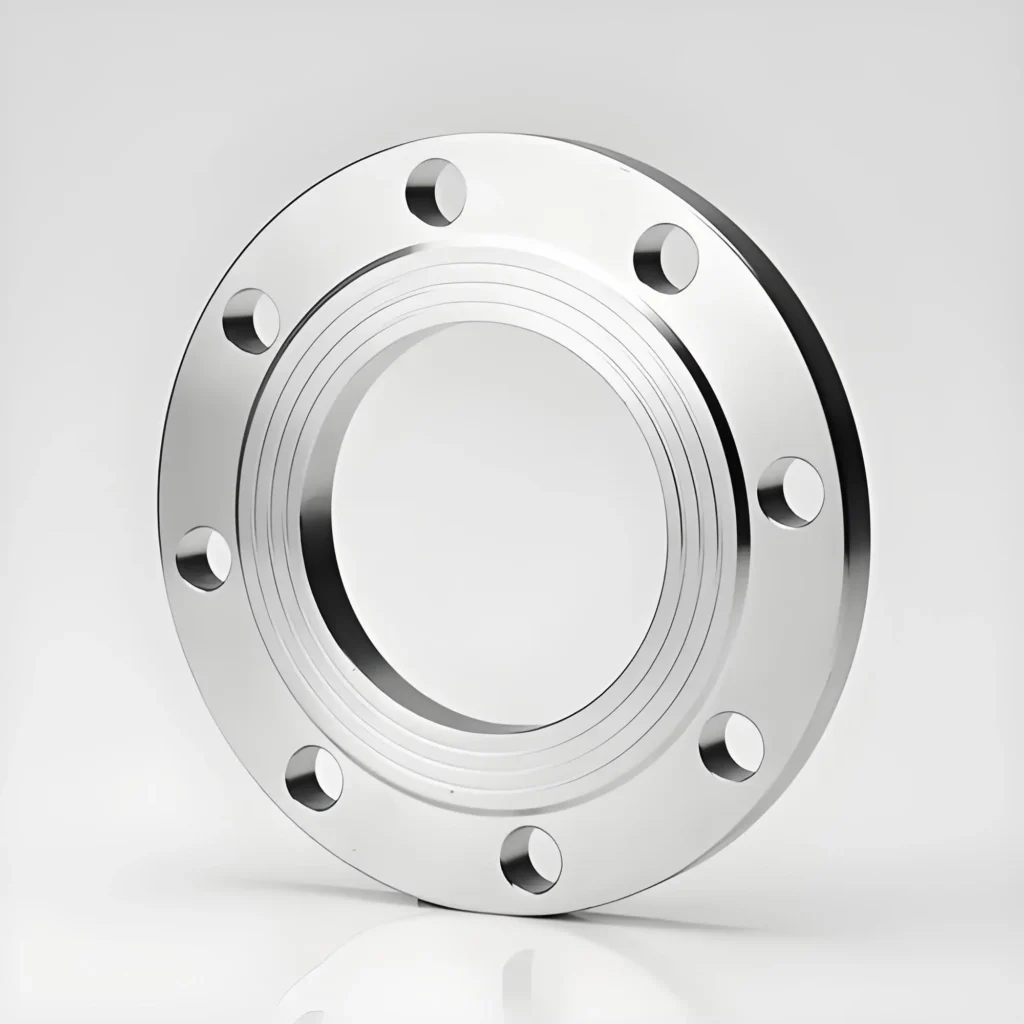
Spectacle Blind Flange (Figure 8 Blind)
A specialty blind consisting of two connected disks, one solid (blanking position) and one with a centered opening (flow position), shaped like the number “8” or eyeglasses. Operators can rotate the spectacle blind 180° to switch between open and closed positions without removing it from the piping system. A protruding handle or tab indicates the current position. Ideal for systems requiring regular flow isolation and resumption, such as seasonal process changes or routine maintenance cycles.
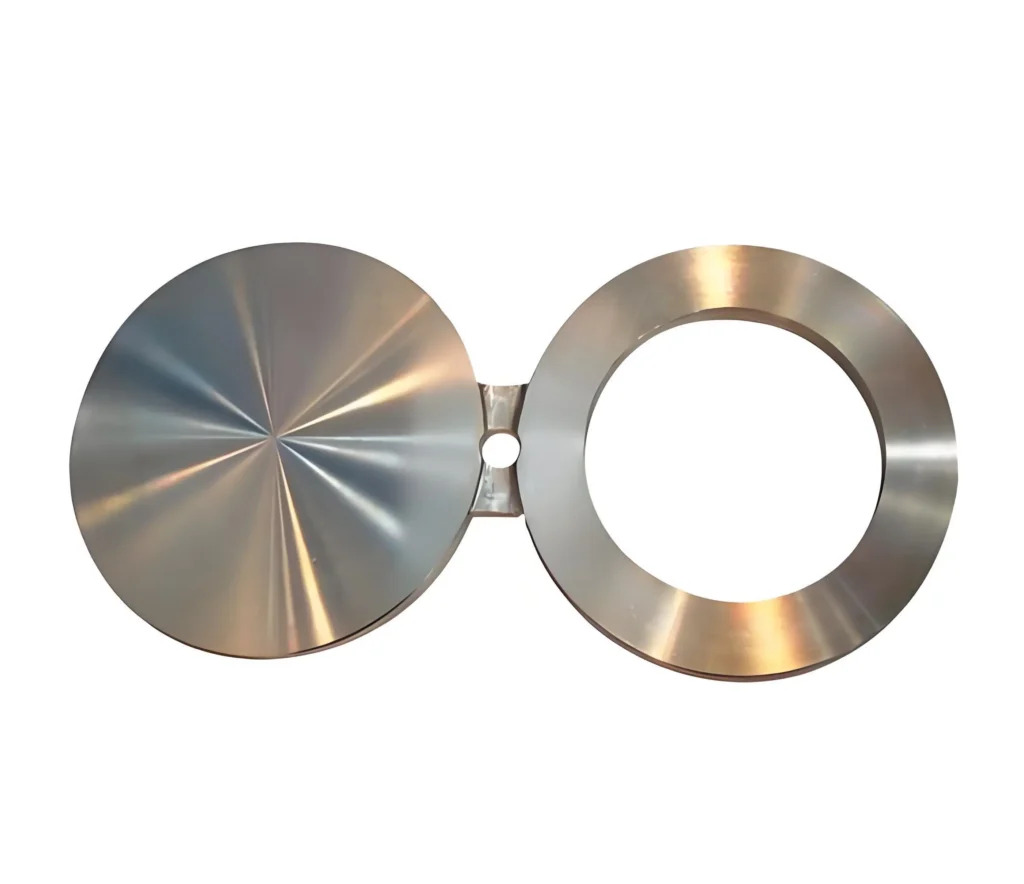
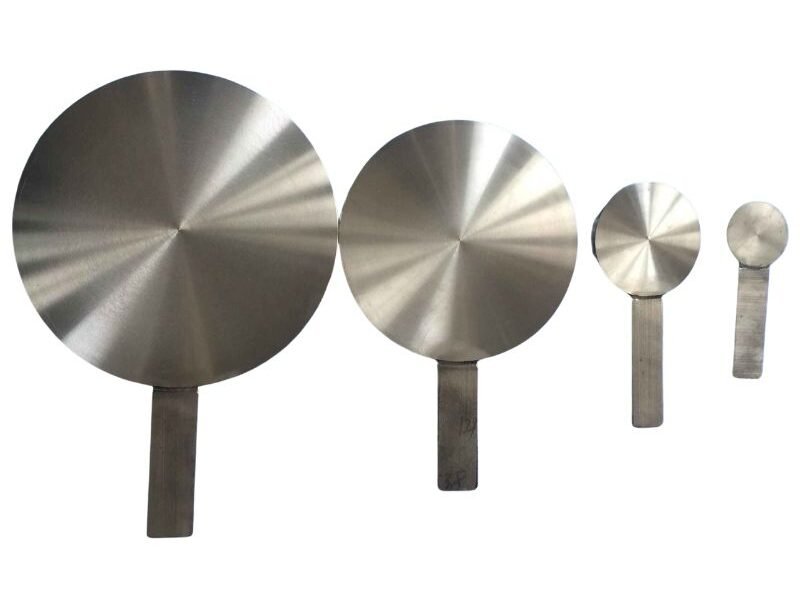
Paddle Blank (Spade and Spacer)
Similar in function to spectacle blinds but consisting of two separate components: a solid spade (blank) and a ring spacer (open). These flat, paddle-shaped devices slide between flanges to create or remove isolation. The separate design prevents accidental flow blockage since the spacer must be physically removed and replaced with the spade. Commonly used in larger diameter or high-pressure applications where spectacle blinds would be too heavy or cumbersome.
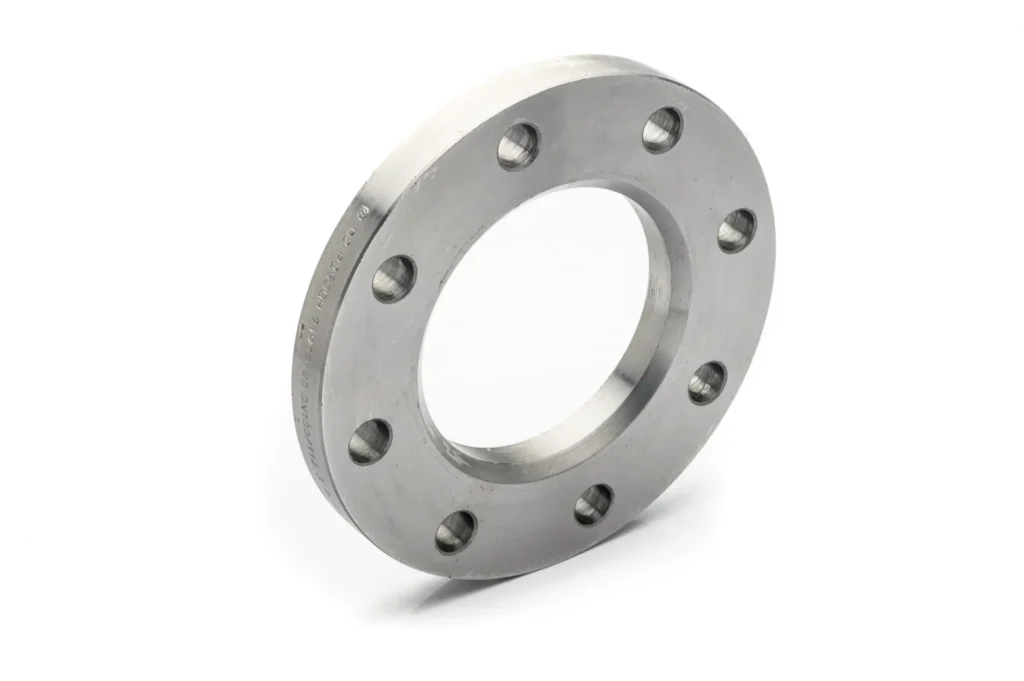
Spacer Ring
A hollow ring used in conjunction with spade blinds. When the spade is removed to allow flow, the spacer maintains proper bolt length and gasket compression, preventing leakage. Typically left in place permanently while spades are installed or removed as needed.
Blind Flange Materials and Manufacturing
Common Materials
Carbon Steel (ASTM A105, A350 LF2)
Most economical option for general industrial applications at moderate temperatures (-29°C to 425°C) and pressures. Suitable for water, air, steam, and non-corrosive process fluids.
Stainless Steel (304/304L, 316/316L)
Corrosion-resistant grades for chemical processing, food & beverage, pharmaceutical, and marine environments. Type 316 offers superior resistance to chlorides and acidic media.
Alloy Steel (ASTM A182 F11, F22, F91)
High-temperature applications (up to 650°C) in power generation, petrochemical refineries, and thermal processing. Chrome-moly alloys provide creep resistance and strength retention at elevated temperatures.
Duplex & Super Duplex Stainless (F51, F53, F55)
Combines high strength with excellent corrosion resistance for offshore oil & gas, desalination plants, and aggressive chemical environments. Resists stress corrosion cracking and pitting.
Aluminum, Copper, PVC, and Specialty Plastics
Used in specific industries—aluminum for lightweight cryogenic systems, copper for heat transfer applications, and PVC/CPVC/PP for corrosive chemical handling where metallic materials would degrade.
Manufacturing Methods
Forging
Hot forging from bar stock or billets produces superior grain structure and mechanical properties. Used for critical high-pressure or high-temperature applications requiring traceability and material certifications (ASME, PED).
Casting
Investment or sand casting allows complex geometries and larger sizes at lower cost. Suitable for lower-pressure applications (Class 150-300) where forged quality is not mandated.
Cutting/Machining
Plate cutting from flat stock followed by CNC machining of bolt holes and facing surfaces. Cost-effective for large-diameter, low-pressure blinds or non-standard sizes.
Facing Types and Gasket Surfaces
Flat Face (FF): Full-face contact for low-pressure cast iron or plastic flanges
Raised Face (RF): Most common, accepts spiral-wound or sheet gaskets
Ring-Type Joint (RTJ): Metal-to-metal seal for high-pressure applications (API 6A)
Tongue and Groove (T&G): Self-centering design preventing gasket blowout
Male-Female (M-F): Similar to T&G with different profile dimensions
Industry Standards and Specifications
International Standards
ASME B16.5 – Pipe Flanges and Flanged Fittings (NPS 1/2 through NPS 24)
Covers pressure-temperature ratings, dimensions, tolerances, and materials for Class 150-2500 flanges in North American markets.
ASME B16.47 – Large Diameter Steel Flanges (NPS 26 through NPS 60)
Specifies requirements for Series A (MSS SP-44) and Series B (API 605) large-bore flanges.
EN 1092-1 – Flanges and Their Joints (European Standard)
European equivalent covering PN 2.5 to PN 400 pressure ratings with metric dimensions.
GB/T 9123-2010 – Steel Pipe Flanges (Chinese National Standard)
Specifies dimensions and technical requirements for carbon and alloy steel blind flanges in China.
GB/T 4450-1995 – Marine Blind Flanges
Dedicated standard for shipbuilding and marine piping applications.
Chemical Industry Standards
HG/T 20592-2009 – Steel Flanges for Chemical Process Industry
Chemical engineering standard covering materials, pressure ratings, and corrosion resistance requirements.
HG/T 20615-2009 – Steel Blind Flanges
Specific dimensional and material specifications for blind flanges in chemical processing plants.
MSS SP-44 – Steel Pipeline Flanges
Manufacturers Standardization Society specification for larger-diameter industrial flanges.
Installation and Safety Considerations
Proper Installation Procedures
Surface Preparation: Clean flange faces, remove old gasket material, and inspect for damage
Gasket Selection: Match gasket material to process media, temperature, and pressure
Bolt Tightening: Use cross-pattern (star pattern) torque sequence to ensure even compression
Torque Specifications: Follow manufacturer’s torque values based on bolt size, material, and flange rating
Verification: Perform visual inspection and leak testing before pressurization
When to Use Blind Flanges vs. Permanent Closures
Blind flanges should be used when:
Future access or system modifications are anticipated
Equipment requires periodic inspection or cleaning
Temporary isolation during construction or testing is needed
Regulatory compliance requires physical isolation (lock-out/tag-out)
Permanent closures (welded caps) are preferable when:
Long-term sealing with no planned reopening is required
Higher integrity sealing is mandated by codes
Welding is more cost-effective than bolted flanges for the application
Important Warnings and Limitations
Not Recommended for Long-Term Continuous Use
While blind flanges provide effective sealing, they are primarily designed for temporary isolation or applications requiring periodic access. Bolted joints may experience creep relaxation, gasket degradation, or corrosion over extended periods, potentially compromising seal integrity.
Quality and Material Compliance Critical
For long-duration applications, blind flanges must be manufactured from materials compatible with process media, temperature, and pressure conditions. Use only certified materials with proper mill test reports (MTR) and follow code-compliant fabrication practices.
Regular Inspection Required
Periodically inspect blind flanges for:
Bolt tension loss (retorque as needed)
Gasket weeping or deterioration
Corrosion on flange faces or bolting
Proper identification tags confirming isolation status
Blind Flange Pressure Ratings and Sizing
ASME Pressure Classes
Blind flanges are available in standard ASME B16.5 pressure classes:
Class 150: Up to 285 psig @ 38°C (carbon steel)
Class 300: Up to 740 psig @ 38°C
Class 600: Up to 1480 psig @ 38°C
Class 900: Up to 2220 psig @ 38°C
Class 1500: Up to 3705 psig @ 38°C
Class 2500: Up to 6170 psig @ 38°C
Pressure-temperature ratings decrease at elevated temperatures—consult ASME B16.5 tables for specific service conditions.
Conclusion
Blind flanges are widely used in piping systems across various industries to ensure safety and efficiency. By providing a reliable seal, blind flanges help maintain the integrity of pipelines, prevent leaks, and facilitate maintenance work. Understanding the different types of blind flanges, their materials, and applicable standards is crucial for businesses to select the appropriate flanges.
If you are looking for high-quality blind flanges for your next project, please contact us today. Our team is ready to assist you.