
Project Overview
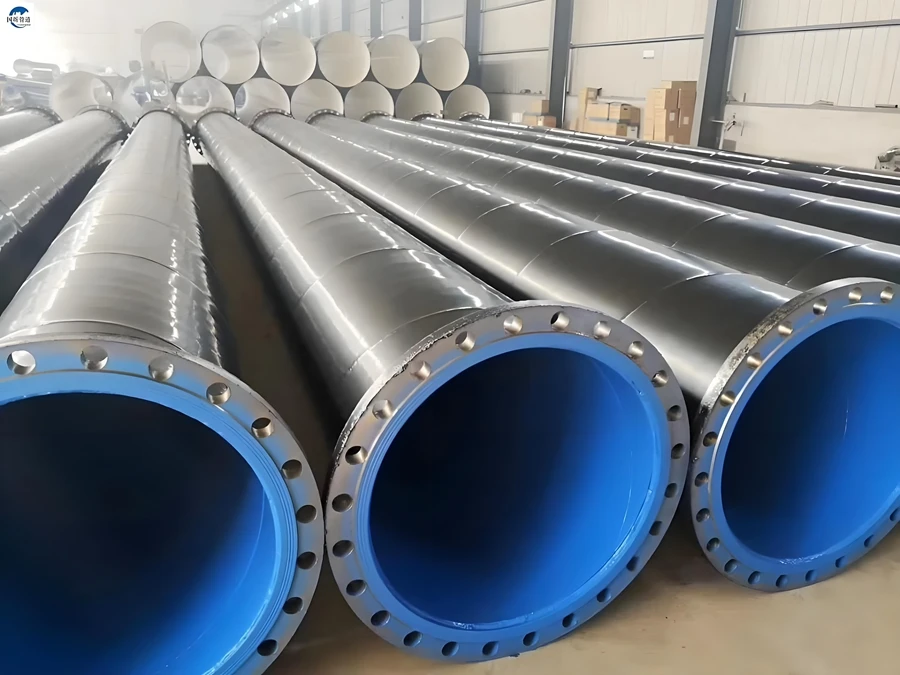
This project focused on supplying corrosion resistant pipes in water treatment for a European municipal wastewater treatment facility.
The pipeline system handled chemically aggressive wastewater, requiring reliable corrosion resistance and precise dimensional control.
Our company provided this client with suitable materials, controllable manufacturing processes, and compliance with European inspection standards, thereby being selected to supply corrosion-resistant piping for water treatment applications.
Customer Requirements
The water treatment contractor required:
- Pipes that resist corrosion from acids, alkalis, chloride ions, and wastewater chemicals.
- Precise dimensions to match pumps and system components.
- Full inspection documentation and no damage during transit.
Solution
To address these requirements, DHX provided corrosion resistant pipes solutions, :
Quality Control: 100% radiographic and ultrasonic testing; ISO 9001 and certified material reports.
Material Selection: 304L/316L stainless steel and PTFE‑lined carbon steel for strong chemical resistance.
Reinforced Wall Design: Thickened walls for large‑diameter pipes to reduce pressure stress.
Transport Protection: Plastic end caps, pallets, and reinforced export crates.
Technical Specifications
| Parameter | Technical Specifications |
|---|---|
| Standard | EN 10217‑7 / ASTM A312 |
| Types | Butt‑welded Pipes, Elbows, Tees, Reducers |
| Material | 304L, 316L SS, PTFE‑lined carbon steel |
| Wall Tolerance | ±0.5 mm |
| Corrosion Protection | Long‑term resistance to wastewater/chemical corrosion |
| Angular Precision | ≤ ±1° |
| Testing | 100% RT + 100% UT |
| Processes | Cold/Hot Forming, Welding |
Customer Feedback on Corrosion Resistant Pipes
DHX’s corrosion resistant pipes in water treatment met our project’s stringent specification and transit protection standards, ensuring reliable performance in a corrosive environment.
Conclusion
DHX’s corrosion resistant pipes in water treatment solutions provide durable performance through the right materials, reinforced design, strict testing, and secure delivery, enabling long‑term safe operation of water infrastructure systems.